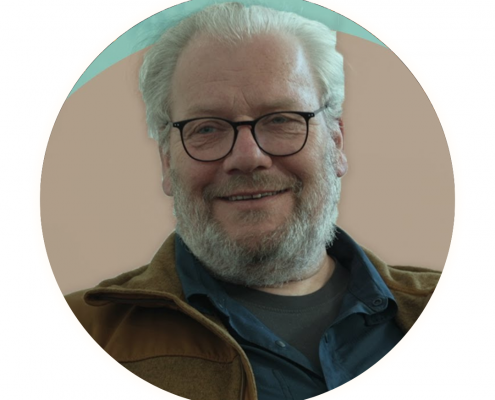
Dirk Corstens
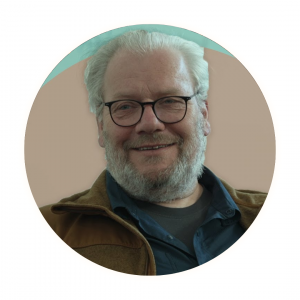
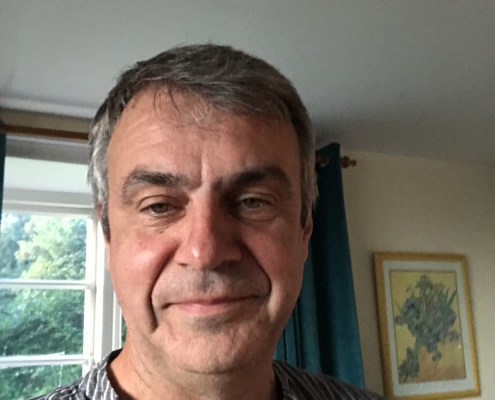
Social psychiatrist and psychotherapist, now working in private practice in the Netherlands. Together with colleagues he delivers social network meetings from the perspective of Peer-supported Open Dialogue and works with voice hearers according to the Maastricht Approach.
Areas of interest
- Voice Dialogue
- Peer Supported Open Dialogue
- Human Rights and Social Justice
Dirk was Chair of the Intervoice Board between 2009 and 2016 during which time Hearing Voices groups were established in 11 new countries. He is still on the Board of Intervoice, but the Chair is now always held by a Voice Hearer. During his work and research, Dirk discovered that many people who hear challenging voices found that a turning point in coping with the experience is finding different ways of talking with and understanding them. Exploring the voice’s motives and discovering different ways of relating to them can help change the relationship between the voice-hearer and their voices. He says:
Voice Hearing is a normal experience and when you pathologise it, the outcome is really bad. Psychiatry treats hearing voices pathologically, and honestly that’s the main problem. When you support people to learn to live with their voices, to cope with their voices, then the outcome is just another human being with all kinds of capacities. Hearing voices can be very difficult if you can’t accept it. You can become mad from voices, but voices by themselves are not the madness.
Since the early 1990s Dirk has collaborated with Professor Marius Romme and Dr Sandra Escher, helping shape what became known as the Maastricht Approach – a structured method for understanding voices in the context of a person’s life story. This approach assumes that hearing voices is a meaningful human experience, rather than a symptom to be suppressed with medication alone. Instead voices can be engaged with, understood and integrated. And medication can be a choice rather than something people are forced to take for life.
Throughout the years, Dirk has worked with all the central figures in the Hearing Voices Movement, including the late Ron Coleman, Rufus May and Eleanor Longden. Together, they contributed to a truly global movement for dignity, choice and social inclusion, and the development of emancipatory approaches to mental health care. As a psychiatrist working alongside and learning from voice hearers, Dirk’s approach has changed the field and given many people hope.
I came into contact with psychiatrist Dirk Corstens. For 30 years, he has been working with voice hearers, and during his sessions, he actually engages in conversation with the voices themselves. A fascinating methodology in which he searches for the possible secret the voice harbors. This can be transformative for the voice hearer. Who is that voice, actually? What does it want and what does it say? Could that voice – if taken seriously – perhaps have something to tell you? Something that helps you understand why it’s there? Would the voice be willing to reveal that?
Dirk is currently one of the supervisors of the large multicentre Talking With Voices’ Randomised Controlled Trial led by Dr Eleanor Longden at Manchester University. This landmark study investigates dialogical approaches to working directly with voices and has the potential to reshape mainstream clinical practice.
Across his clinical, teaching and research work, Dirk remains committed to an emancipatory vision of mental health care – one where people are supported to make sense of their experiences, reclaim personal agency and build relationships that foster healing. As a psychiatrist he shows there can be more to working with complexity than prescribing medication, modelling a non-coercive, relational and rights based approach that we hope one day will be the norm not the exception.